Introduction
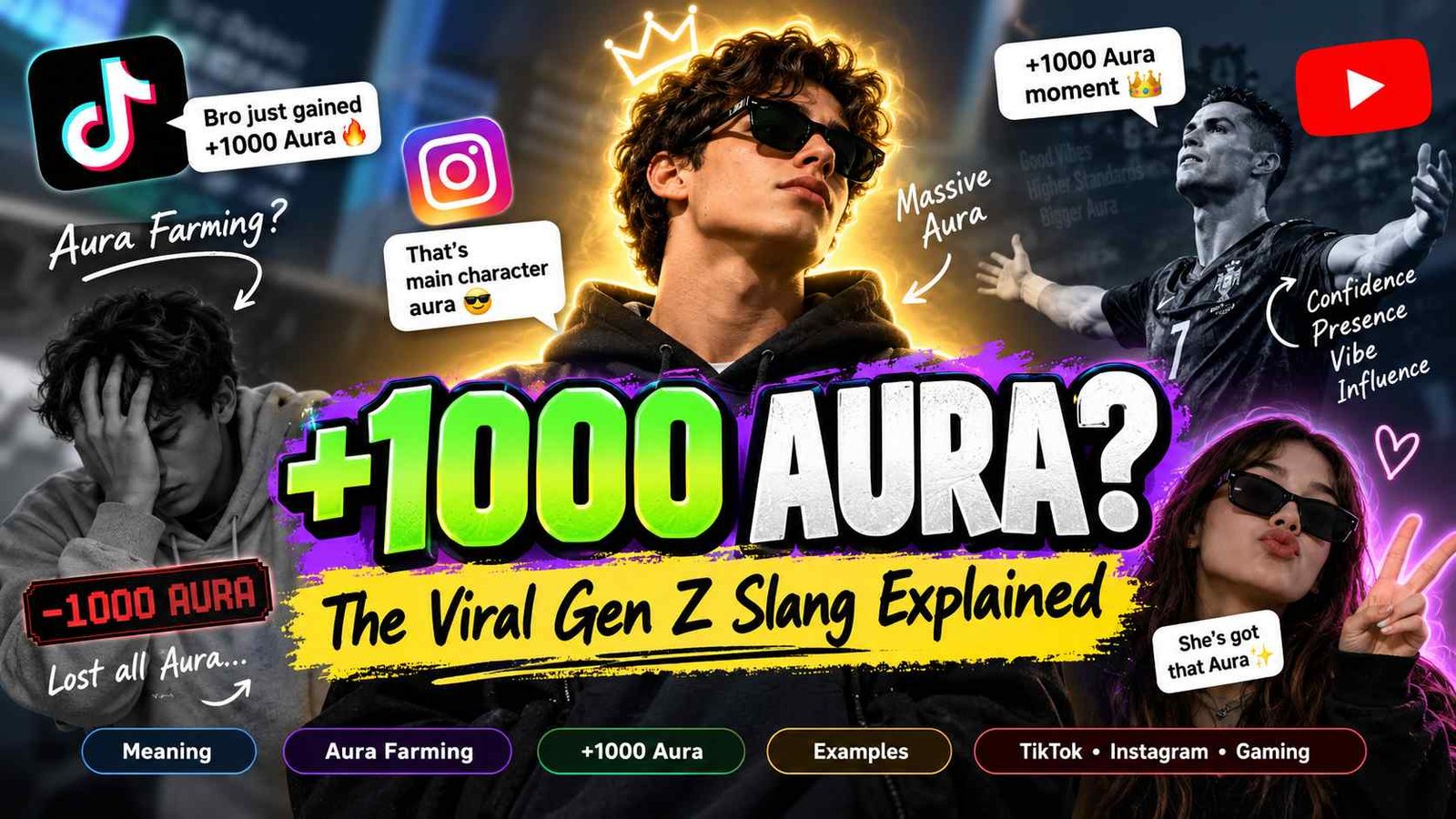
If you’ve spent even a few minutes on TikTok, Instagram Reels, YouTube Shorts, or X recently, you’ve probably seen comments like:
- “Bro just gained +1000 Aura.”
- “Massive Aura moment.”
- “She lost all her Aura after that.”
- “Aura Farming at its finest.”
For many people, especially those outside Gen Z and Gen Alpha circles, these comments can seem confusing at first. What exactly is “Aura”? Why are people talking about gaining or losing it? And how did a word that once had a spiritual meaning become one of the internet’s favorite slang terms?
The answer lies in the way online culture evolves.
Social media platforms have created a world where words constantly change meaning. Terms that once belonged to philosophy, spirituality, psychology, or self-help communities are now being transformed into memes, jokes, and internet slang.
“Aura” is one of the best examples of this trend.
While the traditional meaning of Aura refers to an invisible energy or atmosphere surrounding a person, Gen Z has given the word a completely new twist. Today, Aura is often used to describe someone’s confidence, presence, coolness, social influence, or overall vibe.
In many ways, Aura has become a social scorecard for the internet generation.
A person who handles an awkward situation perfectly might gain Aura.
Someone who embarrasses themselves in front of thousands of viewers might lose Aura.
A celebrity who walks into a room and instantly captures everyone’s attention might be described as having “massive Aura.”
The term has exploded across TikTok, Instagram, meme pages, gaming communities, sports discussions, and influencer culture.
In this guide, we’ll explore what Aura means, how its definition has changed over time, why it became so popular online, and what people really mean when they talk about gaining or losing Aura points.
Ghop Ghop Meaning: What Does This Viral Slang Mean on Social Media?
What Does Aura Mean?
Before understanding the internet slang version, it’s important to understand the original meaning of the word.
Traditionally, Aura refers to an invisible energy field or atmosphere believed to surround a person, object, or place.
The concept appears in many spiritual traditions around the world.
Some people believe that emotions, personality traits, and energy levels create an Aura that others can sense.
For example:
- A calm person may be described as having a peaceful Aura.
- A leader may be described as having a powerful Aura.
- A positive person may be said to radiate a warm Aura.
Although scientific evidence does not support the existence of visible energy fields around people, the idea has remained popular in spiritual and self-development communities for decades.
The Traditional Meaning of Aura
| Meaning | Description |
|---|---|
| Spiritual Aura | Energy field surrounding a person |
| Emotional Aura | The feeling someone gives off |
| Personal Aura | A person’s overall presence |
| Environmental Aura | The atmosphere of a place |
For many years, people used Aura to describe how someone made others feel.
A teacher might have a welcoming Aura.
A celebrity might have a commanding Aura.
A historic building might have a mysterious Aura.
The word wasn’t usually associated with memes or internet jokes.
That changed when social media entered the picture.
How People Used Aura Before Social Media
Before TikTok and Instagram popularized the slang version, Aura was commonly used in:
- Spiritual discussions
- Personal development books
- Meditation communities
- Psychology-related conversations
- Self-help content
For example:
“She has a calming Aura.”
“The room had a positive Aura.”
“His leadership Aura inspired confidence.”
The focus was usually on emotional energy, personality, and atmosphere.
Today, however, Gen Z has transformed the word into something much more playful.
What Does Aura Mean in Gen Z Slang?
In Gen Z slang, Aura refers to a person’s social presence, confidence, coolness, reputation, influence, or overall vibe.
Think of Aura as an invisible popularity score.
It’s not a real number.
It’s a meme-based way of measuring how impressive, confident, stylish, or respected someone appears to be.
When Gen Z says someone has Aura, they’re usually talking about the way that person carries themselves.
For example:
- A student confidently giving a speech may gain Aura.
- An athlete making a game-winning play may gain Aura.
- A celebrity handling criticism gracefully may gain Aura.
- Someone acting awkwardly in public may lose Aura.
The slang meaning focuses less on spirituality and more on social perception.
Why Gen Z Uses Aura Differently
Gen Z grew up in a world dominated by social media.
Platforms like TikTok reward confidence, personality, and memorable moments.
Because of this, internet users constantly evaluate people based on their actions.
Aura became a funny way to describe those evaluations.
Instead of saying:
“That person looked really confident.”
People now say:
“That’s a +1000 Aura moment.”
Instead of saying:
“That was embarrassing.”
People say:
“-1000 Aura.”
The term feels playful, humorous, and instantly understandable within online communities.
What Gives Someone Aura?
According to internet culture, Aura can come from many things:
Confidence
People who remain calm under pressure are often seen as having high Aura.
Style
Fashion choices can influence perceived Aura.
Social Influence
Popular creators and influencers are frequently described as having strong Aura.
Athletic Performance
Sports fans regularly use Aura to describe impressive plays.
Charisma
People who naturally attract attention often gain Aura points in online discussions.
Signs Someone Has High Aura
- They stay confident in difficult situations.
- People naturally pay attention to them.
- They appear calm and collected.
- They make strong first impressions.
- Others view them as influential.
In many ways, Aura has become the internet’s version of personal charisma.
What Is Aura Farming?
One of the most popular internet phrases connected to Aura is “Aura Farming.”
Aura Farming refers to intentionally doing things that make you look cool, confident, impressive, or influential.
The phrase is usually used humorously.
People often accuse influencers, athletes, celebrities, and content creators of Aura Farming when they seem to be performing for attention.
Simple Definition
Aura Farming means:
Deliberately trying to increase your perceived coolness, status, or social presence.
Examples of Aura Farming
A creator slowly walking away from an explosion in a dramatic video.
An athlete posing after scoring a goal.
A celebrity wearing sunglasses indoors for dramatic effect.
A streamer acting mysterious to impress viewers.
In each case, the person may be trying to appear more impressive than necessary.
Internet users often jokingly label these moments as Aura Farming.
Crochet Abbreviation Meanings: A Beginner-Friendly Guide
Why Aura Farming Became Popular
Several factors helped the phrase spread.
Short-Form Video Content
TikTok and Instagram reward dramatic moments.
Meme Culture
People enjoy turning everyday actions into jokes.
Celebrity Culture
Fans constantly analyze public figures.
Gaming Influence
The idea of earning points fits naturally with internet humor.
Aura Farming combines all these elements into a simple, funny phrase that people can apply to almost any situation.
Is Aura Farming Always Negative?
Not necessarily.
Sometimes it’s criticism.
Other times it’s admiration.
For example:
“Bro is Aura Farming.”
Can mean:
- “He’s trying too hard.”
- “He’s incredibly cool.”
- “That was impressive.”
- “That was funny.”
The meaning often depends on context and tone.
What Does “+1000 Aura” Mean?
One of the most common Aura-related phrases online is “+1000 Aura.”
If you’ve seen it in comment sections, you may have wondered where it came from.
The concept is inspired by gaming culture.
Video games often reward players with points for completing actions.
Internet users applied the same idea to social situations.
How Aura Points Work
Aura points are fictional.
Nobody actually tracks them.
They’re simply a joke used to measure how cool or embarrassing a moment appears.
Aura Point Scale
| Phrase | Meaning |
|---|---|
| +1000 Aura | Extremely cool moment |
| +500 Aura | Good impression |
| -1000 Aura | Embarrassing moment |
| Aura Farming | Trying to look cool |
| Massive Aura | Strong presence |
Examples of +1000 Aura Moments
A student giving the perfect comeback during a debate.
An athlete winning a championship in dramatic fashion.
A celebrity responding to criticism with confidence.
Someone helping a stranger without expecting recognition.
These moments often attract comments like:
“+1000 Aura.”
“Bro gained infinite Aura.”
“Massive Aura increase.”
Examples of Losing Aura
Aura can also be lost.
For example:
- Tripping while trying to look cool.
- Getting caught lying online.
- Posting something embarrassing.
- Failing in a highly public situation.
Comments may include:
“-1000 Aura.”
“Aura destroyed.”
“Lost all Aura instantly.”
The humor comes from treating social interactions like a video game.
Why Aura Points Became a Meme
Aura points combine several internet trends:
- Gaming culture
- Meme culture
- Social media reactions
- Competitive humor
- Viral comment sections
The result is a simple joke that works almost everywhere online.
Whether the topic is sports, celebrities, influencers, gaming, or everyday life, Aura points provide a funny way to judge what happened.
And that flexibility is one of the biggest reasons Aura became one of the internet’s favorite slang words.
Why Is Aura So Popular on TikTok?
Not every internet slang term survives for long.
Many viral words appear for a few weeks and then disappear. Aura, however, has managed to become one of the most recognizable Gen Z expressions online.
The reason is simple: Aura can be used almost anywhere.
Whether someone is discussing sports, celebrities, school life, gaming, fashion, or memes, Aura fits naturally into the conversation.
Meme Culture
Modern internet culture thrives on simple jokes that can be applied to almost any situation.
Aura works perfectly because people instantly understand the concept.
When someone does something impressive, users can simply commen
“+1000 Aura.”
When someone embarrasses themselves:
“-1000 Aura.”
The joke is quick, easy, and relatable.
That simplicity helped Aura spread rapidly across TikTok and other social platforms.
Short Videos
Short-form content has changed how trends spread online.
TikTok videos often last only a few seconds.
Because of this, users need fast and recognizable phrases.
Aura became ideal for quick reactions.
Instead of writing a long explanation, users can summarize an entire situation with a single phrase.
Influencer Trends
Influencers played a major role in popularizing Aura.
Many creators began using the term in:
- Reaction videos
- Sports edits
- Lifestyle content
- Fashion clips
- Comedy sketches
As larger creators adopted the word, their audiences started using it too.
Soon, Aura became part of everyday internet vocabulary.
Gen Z Humor
Gen Z humor often combines irony, exaggeration, and gaming references.
Aura perfectly matches this style.
People know Aura points aren’t real.
That’s exactly why the joke works.
The exaggerated idea that someone can suddenly gain or lose thousands of Aura points makes ordinary situations much funnier.
Examples of Aura in Real-Life Situations
One reason Aura became so popular is that it applies to everyday life.
People constantly use it to describe social situations.
School Example
Imagine a student confidently answering a difficult question that nobody else could solve.
Classmates might say:
“That was a +1000 Aura moment.”
The student appears intelligent, confident, and impressive.
Sports Example
A basketball player hits a game-winning shot in front of a packed crowd.
Social media comments might include:
“Massive Aura.”
“Infinite Aura gained.”
The athlete’s confidence increases their perceived Aura.
Dating Example
Someone approaches their crush confidently and starts a conversation naturally.
Friends may describe that action as:
“Aura boost.”
Confidence often translates into higher Aura in internet culture.
Social Media Example
A creator responds to criticism with humor and maturity.
Followers may say:
“That response gained him +1000 Aura.”
The creator’s reputation improves because of how they handled the situation.
Friend Group Example
A person arrives at a party dressed well, acts confidently, and quickly becomes the center of attention.
Friends might jokingly say:
“Bro has unmatched Aura.”
These examples show how Aura can apply to almost any social interaction.
Aura Meaning on TikTok
TikTok is arguably the platform most responsible for Aura’s popularity.
The term appears everywhere:
- Video captions
- Comments
- Reaction clips
- Sports edits
- Influencer content
How Creators Use Aura
Creators often use Aura when discussing:
- Confidence
- Charisma
- Popularity
- Impressive moments
- Personal style
For example, a video showing an athlete walking into a stadium may receive comments such as:
“The Aura is unreal.”
Or:
“Massive Aura Farming.”
Viral Aura Trends
Many TikTok trends involve ranking people’s Aura.
Users often compare:
- Athletes
- Celebrities
- Influencers
- Fictional characters
- Anime characters
The discussion becomes less about facts and more about perception.
Common TikTok Comments
Some of the most popular Aura-related comments include:
- “+1000 Aura”
- “-1000 Aura”
- “Aura Farming”
- “Infinite Aura”
- “Massive Aura”
- “Lost all Aura”
These phrases have become part of TikTok’s everyday language.
Aura Meaning on Instagram
Instagram uses Aura in a slightly different way.
The platform focuses heavily on aesthetics, personal branding, and lifestyle content.
As a result, Aura often becomes connected to appearance and presentation.
Reels Culture
Instagram Reels helped spread Aura beyond TikTok.
Users regularly comment on:
- Fashion videos
- Travel content
- Fitness clips
- Luxury lifestyle posts
Examples include:
“This outfit gives +1000 Aura.”
“That entrance was pure Aura.”
Meme Pages
Many meme accounts use Aura jokes because they are instantly recognizable.
A simple image combined with an Aura caption can generate thousands of shares.
Influencer Culture
Influencers carefully manage how they present themselves online.
Because Aura relates to confidence and presence, it naturally fits influencer marketing.
Followers often associate strong personal brands with high Aura.
Aura Meaning in Gaming
Gaming communities quickly adopted Aura because the concept feels similar to video game progression systems.
Most games reward players with points, ranks, achievements, or levels.
Aura points work in a similar way—except they exist only as a joke.
Competitive Gaming
Players often use Aura to describe impressive performances.
Examples:
- Clutch victories
- Amazing plays
- Perfect strategies
- High-pressure moments
A gamer who performs exceptionally well might receive comments like:
“+1000 Aura.”
Streaming Culture
Streamers frequently gain or lose Aura depending on what happens during broadcasts.
Examples include:
- Winning a difficult match
- Making a funny joke
- Embarrassing themselves live
- Pulling off a surprising play
Viewers enjoy treating these moments as Aura gains or losses.
Gaming and Meme Culture
Because gaming communities already understand ranking systems, the Aura concept spread very naturally.
It feels like a social version of a video game scoreboard.
Can Someone Lose Aura?
Absolutely.
In internet culture, losing Aura is often just as entertaining as gaining it.
The concept works because people enjoy watching unexpected or awkward moments.
Examples of Losing Aura
A person trips while trying to make a dramatic entrance.
A celebrity posts something embarrassing.
A streamer accidentally reveals private information.
A sports player celebrates too early and then loses the game.
In each case, internet users may joke that the person lost Aura.
Why Embarrassing Moments Become Memes
The internet loves contrast.
When someone appears extremely confident and then experiences an awkward moment, the difference becomes funny.
That contrast creates perfect meme material.
For example:
Someone walks confidently into a room.
Seconds later, they accidentally knock something over.
The comments section immediately fills with:
“-1000 Aura.”
Social Media Reactions
Aura jokes allow users to react quickly without writing long explanations.
A single phrase communicates everything.
This efficiency is one reason the trend became so widespread.
Is Losing Aura Permanent?
Not according to internet humor.
Aura can always be regained.
Someone who loses Aura today may gain even more tomorrow through an impressive action.
This ongoing “Aura economy” is part of what makes the meme entertaining.
Difference Between Aura, Rizz, and Sigma
Many people confuse Aura, Rizz, and Sigma because all three are popular Gen Z terms.
However, they describe different things.
| Term | Meaning | Popular Platform |
|---|---|---|
| Aura | Presence, confidence, vibe, influence | TikTok |
| Rizz | Ability to attract or impress others romantically | TikTok, Instagram |
| Sigma | Independent, self-reliant personality | Social Media |
Aura
Aura focuses on how impressive or influential someone appears.
It is about presence and perception.
Rizz
Rizz specifically refers to charisma used in romantic or social situations.
Someone with good Rizz can easily start conversations and attract attention.
Sigma
Sigma describes a person who operates independently and follows their own path rather than seeking approval from others.
Which Term Is Most Popular?
All three remain widely used, but Aura has become particularly versatile because it applies to almost every type of social situation.
A person can have:
- High Aura
- Strong Rizz
- Sigma traits
At the same time.
That’s one reason Aura continues growing in popularity across multiple online communities.
Is Aura a Positive or Negative Word?
One of the reasons Aura became so popular is that it can be both positive and negative depending on the situation.
Unlike many slang terms that have a fixed meaning, Aura is highly flexible.
When Aura Is Positive
Most of the time, Aura is used as a compliment.
People use it to describe someone who appears:
- Confident
- Charismatic
- Influential
- Stylish
- Respected
- Memorable
For example:
“That athlete has incredible Aura.”
“She walked into the room with massive Aura.”
In these situations, Aura represents admiration.
When Aura Is Negative
Aura becomes negative when someone loses credibility, confidence, or social status.
Examples include:
- Embarrassing mistakes
- Public failures
- Awkward interactions
- Poor decisions
Comments such as:
“-1000 Aura.”
“Lost all Aura instantly.”
Are usually playful criticisms rather than serious insults.
Online Humor vs Serious Usage
Most Aura discussions are humorous.
People rarely use Aura as a serious measurement of someone’s value.
Instead, it serves as a fun way to describe how impressive or unimpressive a moment appears online.
This balance between humor and admiration is one reason the term continues to thrive.
Why Brands and Influencers Are Using Aura
As Aura became part of internet culture, brands and influencers quickly noticed its popularity.
Modern marketing often relies on speaking the language of younger audiences.
Aura gives creators a way to connect with Gen Z in a relatable way.
Social Media Engagement
Words that people already use in comments often generate higher engagement.
Posts containing familiar slang can encourage:
- Likes
- Shares
- Comments
- Discussions
Because Aura is widely recognized, it naturally attracts interaction.
Meme-Friendly Marketing
Brands increasingly use memes to appear more relatable.
Examples include captions such as:
“This new product gives +1000 Aura.”
Or:
“Instant Aura upgrade.”
These phrases feel native to internet culture rather than traditional advertising.
Influencer Branding
Influencers frequently build their careers around perception.
Because Aura is closely tied to confidence and presence, it fits perfectly within influencer culture.
Followers often describe successful creators as having:
- Strong Aura
- Main character Aura
- Massive Aura
These descriptions reinforce personal branding.
Gen Z Communication
Younger audiences prefer language that feels authentic.
Corporate messaging often struggles to achieve this.
Aura helps brands participate in online conversations without sounding overly formal.
However, successful use requires understanding the culture behind the term.
Forced slang usually feels unnatural and may generate negative reactions.
Frequently Asked Questions
What Does Aura Mean?
Aura traditionally refers to an atmosphere or energy surrounding a person. In Gen Z slang, it means someone’s confidence, presence, influence, or overall vibe.
What Does +1000 Aura Mean?
+1000 Aura means someone did something extremely impressive, confident, or cool.
What Is Aura Farming?
Aura Farming refers to intentionally trying to appear cool, influential, or impressive in order to increase perceived social status.
Is Aura a Compliment?
Yes. In most cases, saying someone has Aura is considered a compliment.
What Does Losing Aura Mean?
Losing Aura means doing something embarrassing, awkward, or socially damaging that negatively affects how others perceive you.
Is Aura Related to Rizz?
They are related but different.
Aura focuses on overall presence and influence.
Rizz focuses specifically on charisma and attraction.
Why Is Aura Trending on TikTok?
Aura became popular because it fits perfectly with meme culture, short-form videos, gaming humor, and influencer content.
Can Girls Have Aura?
Absolutely.
Aura applies to everyone regardless of gender.
Anyone can gain or lose Aura based on their actions and social presence.
What Is Negative Aura?
Negative Aura refers to a bad impression, awkward behavior, or an undesirable social vibe.
What Is the Opposite of Aura?
There is no official opposite, but internet users often describe someone with very low confidence or poor social presence as having “negative Aura.”
Is Aura a Real Measurement?
No.
Aura points are entirely fictional and are used as part of internet humor.
Is Aura Only Used by Gen Z?
Gen Z popularized the term, but people of all ages now encounter Aura through social media and online culture.
Conclusion
Few internet slang terms have spread as quickly as Aura.
What started as a word associated with spirituality, energy, and personal presence has evolved into one of the most recognizable expressions in modern internet culture.
Today, Aura is everywhere.
It appears in:
- TikTok comments
- Instagram Reels
- YouTube Shorts
- Sports discussions
- Gaming communities
- Meme pages
- Influencer content
The term works because it simplifies complex social judgments into a single concept.
Instead of explaining why someone appears confident, influential, or impressive, users can simply say:
“Massive Aura.”
Likewise, awkward or embarrassing moments can be summarized with:
“-1000 Aura.”
The combination of gaming humor, meme culture, social media engagement, and Gen Z creativity helped transform Aura into a global online trend.
As internet language continues evolving, Aura will likely remain a popular term throughout 2026 and beyond.
Even if the exact meme format changes, the underlying idea—measuring confidence, presence, and social influence—will probably continue influencing how people communicate online.
Whether you’re scrolling through TikTok, reading Instagram comments, watching a gaming stream, or following the latest meme trend, chances are you’ll continue seeing Aura everywhere.
And now you’ll know exactly what it means.